The Short Answer
Colour variants are naturally occurring genetic variations – not separate species or subspecies – within familiar plains game like blue wildebeest, impala, and gemsbok/oryx. A recessive gene occasionally produces an individual with a strikingly different coat color: gold instead of grey-brown, black instead of tan. These variants are exceptionally rare in unmanaged wild populations, which is exactly why reserves that maintain breeding populations of them, like several properties across Limpopo, attract hunters and photographers specifically to see and pursue them.
Golden Wildebeest
The golden wildebeest is a colour variant of the common blue wildebeest, carrying a striking honey-gold coat in place of the usual slate-grey. The variant was first identified and selectively established on South African game ranches in the 1990s and has since become one of the most recognizable and commercially significant colour variants in the country’s game industry, commanding a considerable premium over standard blue wildebeest both as breeding stock and as a hunting trophy.
Black Impala
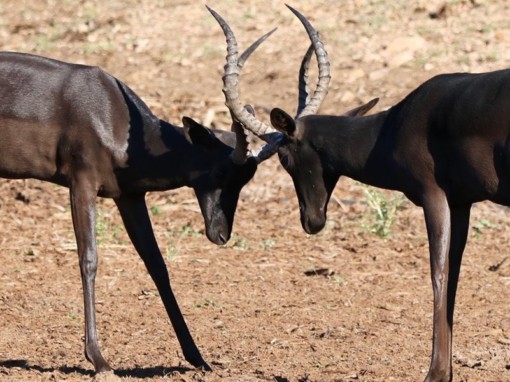
Black impala trace back to a naturally occurring dark-coated impala first documented and selectively propagated on South African farms in the 1950s. Rather than the common impala’s tan-and-white coat, black impala carry a striking near-black coat across the body. Because impala are otherwise one of the most common antelope in southern Africa, the rarity and visual contrast of the black variant makes it a particularly popular trophy for hunters who already have a common impala and are looking for something genuinely different.
Golden Oryx (Golden Gemsbok)
The golden oryx, or golden gemsbok, is a colour variant of the common gemsbok/oryx, replacing the species’ usual grey body and bold black-and-white facial markings with a warm golden-tan coat while retaining the same dramatically long, straight horns the species is known for. It remains one of the rarer colour variants available, and reserves that can offer it alongside standard oryx tend to treat it as a genuine signature species.
A Note on Ethics and Genetics
It’s worth understanding that colour variants are a legitimate, if debated, topic within South African wildlife management. Some conservationists raise concerns about intensive selective breeding programs that isolate and concentrate rare color genes purely for commercial value, arguing it can distort natural genetics if not carefully managed. Others point out that on properties managing free-range or extensively ranched populations rather than small intensive breeding camps, colour variants simply represent naturally occurring genetic diversity being allowed to persist and be observed, rather than artificially engineered. It’s a reasonable question to ask any outfitter offering colour variant species: whether the animals are part of an extensively managed, free-range population or an intensive breeding operation.
Why Hunt – or Simply See – a Colour Variant
Beyond rarity, colour variants offer something genuinely different for hunters who’ve already taken common-colour trophies of the same species, and they’re equally compelling for photographic and non-hunting guests, since a golden wildebeest or black impala herd is a striking, unusual sight even through a camera lens rather than a scope.
Frequently Asked Questions
What causes colour variants like golden wildebeest or black impala?
A naturally occurring recessive genetic trait within the normal species population, producing an unusual coat color. It’s genetic variation within the species, not a separate species or subspecies.
Is a golden wildebeest a different species from a blue wildebeest?
No – it’s the same species (Connochaetes taurinus) carrying a colour-variant gene. Genetically and biologically it is a blue wildebeest with a gold coat.
Are golden wildebeest or black impala rare in truly wild, unmanaged populations?
Yes, extremely rare – which is precisely why game ranches that maintain breeding populations of these variants are the primary place hunters and photographers can reliably see or pursue them.
Do colour variant species cost more to hunt than standard-colour animals?
Significantly more, generally – the trophy fee premium reflects both genuine rarity and the selective management required to maintain a viable variant population.
Can non-hunting guests see colour variant game on a photographic safari?
Yes – properties that maintain colour variant populations for hunting typically also make them available to view on game drives for photographic and leisure guests.