The Short Answer
Cape buffalo is Africa’s most commonly hunted dangerous game species and, for many hunters, the animal that defines a career. It’s absolutely achievable for a first-timer — at Tolilé Lodge, guests take their first dangerous-game animal safely every season — but it’s fundamentally different from plains game hunting. Going in with accurate expectations about the caliber, the fitness, and the mental discipline required matters more here than for any antelope.
Why Buffalo Is a Different Kind of Hunt
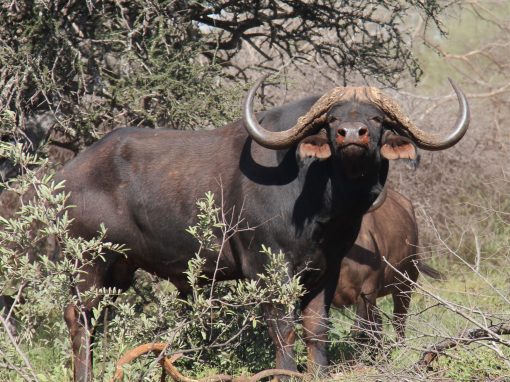
Old dagga boys — solitary or small-group mature bulls past their prime in the breeding herd — are notorious for their unpredictability when wounded, and buffalo as a species has a well-earned reputation among professional hunters as one of the most dangerous animals to follow up if a shot isn’t perfectly placed. This is why a buffalo hunt at Tolilé always puts you alongside Collin van Vliet, our outfitter and professional hunter, and an experienced tracking team — and why the entire hunt is built around patience, wind direction, and getting close on foot rather than long-range shooting. It’s the same standard we apply across all 40+ species on the property, just with a much narrower margin for error.
Physical and Mental Preparation
You don’t need to be an elite athlete, but several hours of walking through uneven Limpopo bushveld over multiple consecutive days is genuinely demanding, especially in the dry-season heat. General cardiovascular fitness and some hiking practice beforehand make a real difference to how much you enjoy the hunt rather than just endure it. Just as important is mental preparation: buffalo hunting involves closing distance on an animal that can weigh over 1,500 pounds and charge at speed, and staying calm, quiet, and disciplined under Collin’s direction in that moment is the single biggest factor in a safe, successful hunt.
Rifle and Caliber Requirements
South African law and standard professional hunting practice require a minimum caliber for buffalo — .375 H&H Magnum or larger, loaded with premium controlled-expansion or solid bullets designed for deep penetration through heavy muscle and bone. This isn’t a place to hunt with borderline equipment: Collin will check your rifle and ammunition before the hunt begins, the same as any experienced PH would. If you don’t own a suitable rifle, quality rifle hire is available at the lodge for $45/day, with ammunition from $8/round depending on caliber, and up to 200 rounds per firearm/caliber allowed into South Africa. No separate hunting license is needed — you hunt under Tolilé’s registered outfitter and PH, and we arrange the provincial permits.
What a Buffalo Hunt Day at Tolilé Actually Looks Like
Mornings typically start early, picking up fresh tracks from a herd or a dagga boy group and following on foot for hours, constantly checking wind direction since buffalo have an excellent sense of smell despite poor eyesight. Much of the day is genuinely slow, deliberate tracking punctuated by short bursts of careful, quiet stalking once the herd or bull is located — this is not a hunt of long-range opportunistic shots, but of patiently earning a close, ethical shot, sometimes across several days before conditions come together. Every hunt runs within the annual quotas set by Limpopo Province’s conservation authority, and the revenue from it is what funds anti-poaching and habitat management on the reserve.
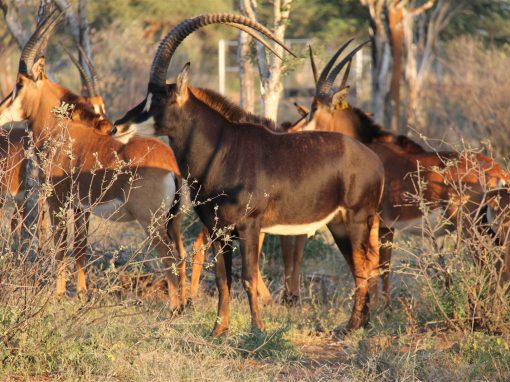
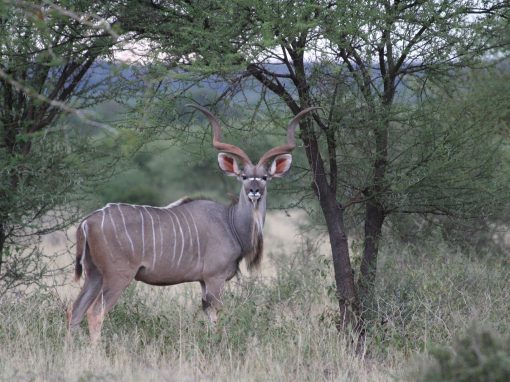
Because buffalo and 40+ plains game species — kudu, sable, roan, impala, and more — all share the same 11,000+ acre property, a buffalo hunt at Tolilé doesn’t mean driving to a different outfitter’s concession to round out your species list. It’s the same trip, without leaving the property.
When to Book
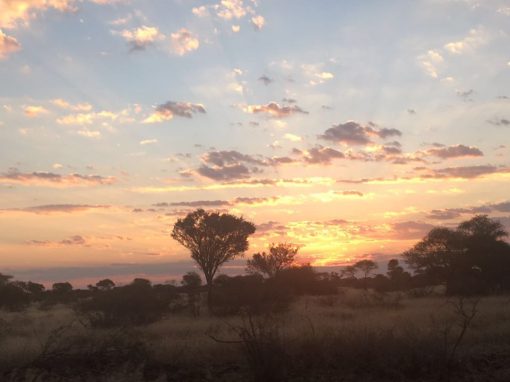
Hunting season at Tolilé runs April through November, the dry season, when thinned bush and cooler weather make for easier tracking. Mornings and evenings are cool — near freezing in June and July — with warm, dry days in between. A dedicated buffalo hunt typically runs 7 to 10 days, giving enough time to locate a mature bull and follow up patiently rather than rushing a shot.
Cost and Trophy Fee Expectations
Standard day rates at Tolilé are Hunter 1×1 $450/day, Hunter 2×1 $375/day and Non-Hunter $280/day. Buffalo trophy fees are quoted per animal and grade — as a general guide, Cape buffalo trophy fees across South Africa currently run roughly $8,000 to $14,000+ depending on the bull’s age and horn quality. Combined with day rates over a 7- to 10-day dedicated hunt, total budgets commonly land between $18,000 and $30,000. Ask Collin & Louise for a quote built around your own species list.
“Six wonderful days spent with the best of friends — old and new. Such a memorable trip, and we appreciate the effort spent on making us so welcome. Old friends are the best!”
— Guy & Rosemarie Woodford, England
Frequently Asked Questions
Do I need prior dangerous-game experience to book a buffalo hunt at Tolilé?
No. With Collin van Vliet as your professional hunter and the correct caliber rifle, buffalo is a realistic and popular first dangerous-game species — though it should never be approached casually. Many first-time buffalo hunters come to Tolilé with plains-game experience only.
Should I bring my own rifle or hire one at Tolilé?
Either works. Bring your own with a temporary South African firearm import permit, or hire one at the lodge for $45/day with ammunition from $8/round. Collin checks every rifle and its ammunition before the hunt regardless of which you choose.
Can I hunt buffalo and plains game on the same trip at Tolilé?
Yes — buffalo and 40+ plains game species are all on the same 11,000+ acre property, so there’s no drive to a different concession partway through your hunt.
How many days should I budget for my first buffalo hunt?
7 to 10 days is standard for a dedicated buffalo hunt at Tolilé, giving Collin and the tracking team enough time to locate a mature bull and follow up patiently rather than rushing a shot.
What’s the difference between a dagga boy and a herd bull?
A dagga boy is an older bull that has left or been pushed out of the breeding herd, often living alone or in small bachelor groups — generally considered the classic, mature trophy buffalo. Herd bulls remain with the breeding herd and are typically younger.